
Everything you need to understand a modern sailing yacht, before stepping onboard.
7 Structured Modules
120+ Video
Lessons
500+ Learning Points
Real Beneteau Oceanis 40.1
The Academy includes over 120 short video lessons and more than 500 interactive learning points organised across 7 structured modules. Each module combines video instruction, 3D exploration, quizzes and practical sailing knowledge.
Module 1: The yacht familiarisation module
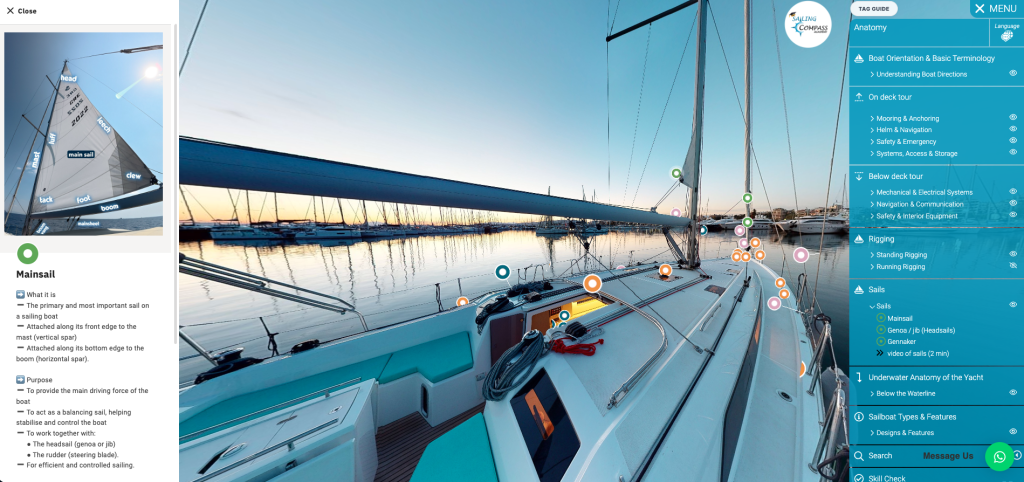
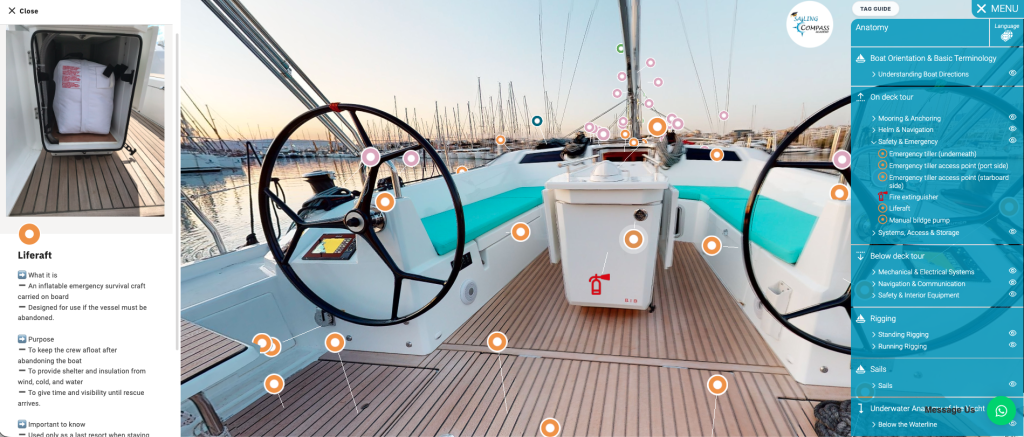
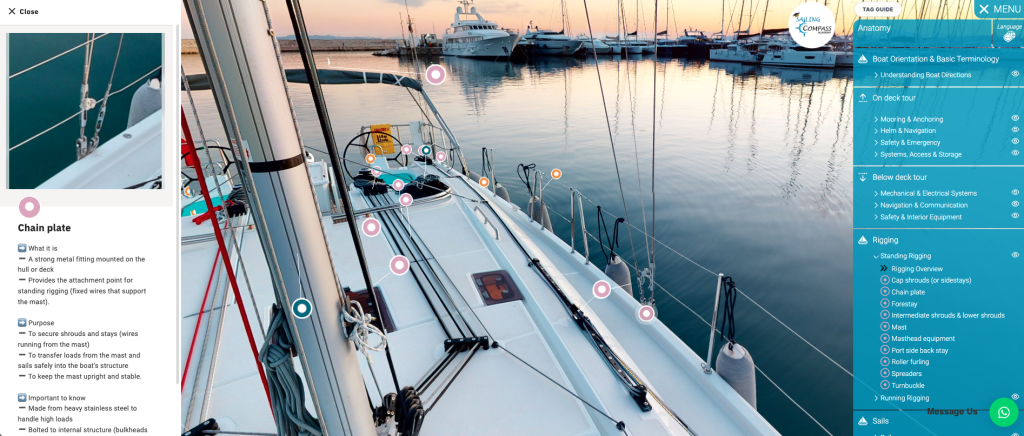
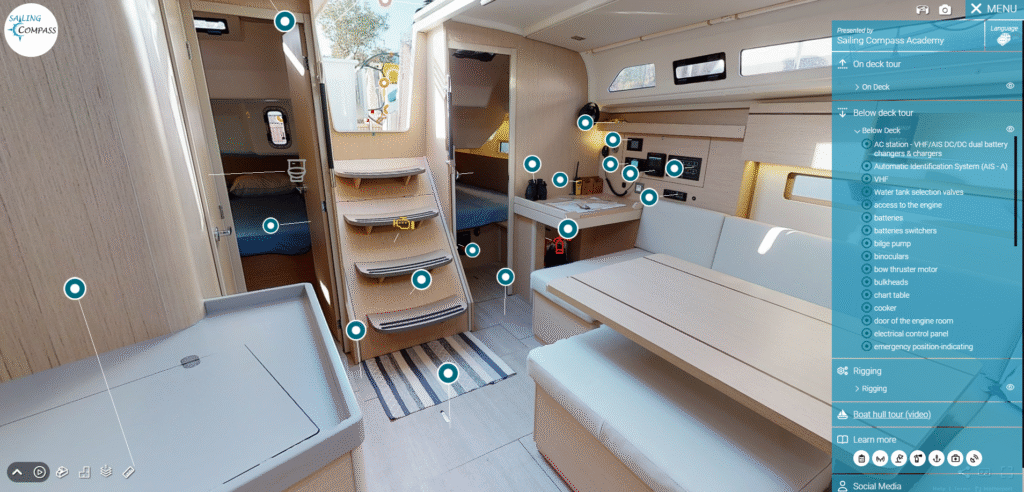
Explore more than 120 interactive learning points across a modern cruising yacht and discover how the boat is organised, where critical equipment is located, how onboard systems connect together, and how sails and rigging function in practice.
Before stepping onboard, you’ll already know your way around the yacht.
Why this module matters
One of the biggest challenges for new sailors is simply knowing where things are.
During a yacht handover, instructors and charter managers use dozens of nautical terms while pointing at equipment all around the boat. Without familiarity, it’s easy to feel overwhelmed and forget important information.
This module helps you become comfortable with the layout, equipment and terminology of a modern cruising yacht before stepping onboard.
What you’ll explore
– Boat Orientation & Basic Terminology
- Boat directions
- Port & starboard
- Bow & stern
- Nautical terminology
– On Deck Tour
- Mooring equipment
- Anchoring system
- Helm & navigation area
- Safety equipment
- Storage compartments
– Below Deck Tour
- Electrical systems
- Mechanical systems
- Navigation & communication equipment
- Interior safety equipment
– Rigging
- Standing rigging
- Running rigging
– Sails
- Mainsail
- Genoa
- Gennaker
- Sail components
– Underwater Anatomy
- Keel
- Rudder
- Hull components
– Sailboat Types
- Common yacht configurations
- Design differences
- Practical applications
After completing this module you’ll be able to
✅ Understand the layout of a modern cruising yacht
✅ Recognise over 100 onboard components and systems
✅ Follow a yacht handover with confidence
✅ Understand sailing terminology used by instructors and crew
✅ Locate key equipment quickly in real situations
✅ Step onboard already familiar with the boat
Module 2: Knots, Sails & Manoeuvres
Build the practical sailing skills that transform theory into action. Learn how to handle lines, understand sail behaviour, trim sails efficiently, and perform common sailing manoeuvres with confidence.
Practice key sailing concepts through interactive simulations, short focused lessons and hands-on exercises designed to prepare you for real sailing conditions.
Why this module matters
Many sailors understand sailing theory but struggle to apply it on the water.
When the wind changes, a manoeuvre is required, or a sail needs adjustment, hesitation and uncertainty can quickly reduce both performance and confidence.
This module helps you understand how sails work, how to handle lines correctly, and how to perform essential sailing manoeuvres safely and efficiently.
What you’ll explore
Line Handling
- Line organisation & deck management
- Essential sailing knots
- Fast knot-tying techniques
Sails
- Essential sailing terminology
- Points of sail
- Sail handling procedures
- Sailing manoeuvres
- Sail configurations
- Sail trim & performance
Interactive Learning Lab
- Sailing simulations
- Practical exercises
- Guided practice scenarios
Skill Check
- Knowledge assessment
- Practical understanding review
After completing this module you’ll be able to
✅ Understand how sails generate power and drive the yacht
✅ Recognise the different points of sail and their purpose
✅ Trim sails more effectively for performance and comfort
✅ Perform common sailing manoeuvres with greater confidence
✅ Organise and manage lines safely onboard
✅ Tie essential sailing knots quickly and correctly
✅ Understand what adjustments are needed as wind conditions change
Module 3: Safety On Board
Learn the procedures, equipment and decision-making skills that help keep you, your crew and your yacht safe. From routine departures and arrivals to emergency situations, this module prepares you to act with confidence when it matters most.
Explore essential safety equipment, emergency procedures, first aid fundamentals and practical crew management techniques used onboard modern cruising yachts.
Why this module matters
Safety is not only about emergencies.
Most onboard incidents happen because of poor preparation, lack of awareness or incorrect procedures during routine operations.
Whether you’re preparing to leave the marina, handling changing weather conditions or responding to an emergency, knowing what to do beforehand can make all the difference.
This module helps you develop safe habits, understand critical safety equipment and respond more effectively when situations become challenging.
What you’ll explore
Life-Saving Equipment
- Personal safety equipment
- Emergency signalling devices
- Onboard safety gear
- Equipment inspection and readiness
Safe Deck Practices & Crew Procedures
- Pre-departure preparation
- Departure manoeuvring
- Arrival procedures
- Weather preparedness
- Crew organisation and communication
Liferaft
- Liferaft equipment
- Deployment procedures
- Emergency preparation
Emergency Response
- Emergency assessment
- Immediate response actions
- Crew coordination
- Emergency communications
First Aid & AED
- Basic first aid principles
- Common onboard injuries
- AED awareness
- Emergency medical response
Engine Safety
- Engine awareness
- Basic operational checks
- Common warning signs
Interactive Learning Lab
- Scenario-based exercises
- Safety simulations
- Practical decision-making practice
After completing this module you’ll be able to
✅ Understand the location and purpose of critical safety equipment
✅ Prepare your yacht and crew before departure
✅ Follow safer departure and arrival procedures
✅ Respond more effectively during onboard emergencies
✅ Understand the fundamentals of first aid and AED use
✅ Recognise developing risks before they become serious problems
✅ Manage your crew with greater confidence and awareness
Module 4: COLREGs – Rules of the Road at Sea
Learn the international rules that govern vessel behaviour at sea and develop the situational awareness needed to navigate safely, predict the actions of other vessels and avoid collisions.
Through practical examples, visual scenarios and interactive exercises, you’ll learn how to interpret real-world situations and make safer decisions on the water.
Why this module matters
Many sailors learn individual navigation rules but struggle to apply them when multiple vessels are moving, conditions are changing and decisions must be made quickly.
Understanding the COLREGs is not about memorising regulations.
It’s about recognising situations early, understanding who should take action, and avoiding dangerous misunderstandings that can lead to close calls or collisions.
This module helps you build the judgement and awareness needed to navigate with confidence in busy waterways and open seas.
What you’ll explore
International Regulations for Preventing Collisions at Sea (COLREGs)
- Introduction & philosophy behind the rules
- Responsibilities between vessels
- Steering and sailing rules
- Sound signals
- Special light signals
- Navigation lights and day shapes
- Practical seamanship applications
Interactive Learning Lab
- Scenario-based simulations
- Collision avoidance exercises
- Decision-making practice
COLREGs Manuals & Reference Material
- Rule summaries
- Practical reference guides
- Learning resources
Skill Check
- Knowledge assessment
- Situational awareness review
After completing this module you’ll be able to
✅ Understand which vessel has right of way in common sailing situations
✅ Interpret navigation lights and day shapes correctly
✅ Recognise and respond to collision risks earlier
✅ Understand sound signals and their meaning
✅ Apply COLREG rules in real-world scenarios
✅ Make safer navigation decisions under pressure
✅ Navigate more confidently around commercial and recreational traffic
Module 5: Anchoring & Mooring Operations
Master the skills required to anchor, dock and secure a yacht with confidence. Learn the equipment, procedures and decision-making techniques used by experienced skippers in real-world situations.
From selecting a safe anchorage to Mediterranean stern-to mooring, this module helps you develop the practical knowledge needed for some of the most important manoeuvres in sailing.
Why this module matters
For many sailors, anchoring and docking are the most stressful moments of any sailing trip.
Wind, depth, other boats, crew communication and limited space can quickly turn a routine manoeuvre into a challenging situation.
This module helps you understand the equipment, procedures and best practices needed to approach anchoring and mooring with greater confidence and control.
What you’ll explore
Boat Equipment for Anchoring
- Anchoring equipment
- Deck & handling equipment
- Monitoring systems
- Safety equipment
Anchoring
- Understanding the anchorage
- Core seamanship rules
- Anchoring procedures
- Shore line techniques
- Anchor recovery
- Troubleshooting common anchoring problems
Docking & Mooring Operations
- Buoy mooring
- Mooring line procedures
- Mediterranean stern-to mooring
- Docking techniques
- Crew coordination during manoeuvres
Skill Check
- Knowledge assessment
- Practical scenario review
After completing this module you’ll be able to
✅ Select safer anchorages and assess conditions
✅ Understand how anchoring equipment works
✅ Deploy and recover an anchor correctly
✅ Set and monitor an anchor with greater confidence
✅ Use shore lines when required
✅ Perform Mediterranean stern-to mooring more effectively
✅ Organise your crew during docking and mooring manoeuvres
✅ Recognise and respond to common anchoring problems
Module 6: Navigation & Situational Awareness
Develop the navigation skills needed to understand your position, interpret your surroundings and make informed decisions on the water. Learn both traditional and electronic navigation methods used aboard modern cruising yachts.
Through practical examples, onboard equipment familiarisation and interactive exercises, you’ll learn how to navigate with greater confidence and awareness in real sailing conditions.
Why this module matters
Modern navigation is much more than following a line on a chartplotter.
Skippers must constantly interpret navigation marks, understand vessel movement, monitor hazards and maintain awareness of their surroundings.
Without a solid understanding of navigation principles, it’s easy to become overly dependent on electronic devices or miss important information.
This module helps you build the awareness and judgement needed to navigate safely and confidently.
What you’ll explore
Navigation Fundamentals
- Navigation terminology
- Core navigation concepts
- Understanding position and movement
Onboard Navigation Equipment
Traditional Navigation
- Compass
- Paper charts
- Manual navigation tools
Electronic Navigation
- Chartplotters
- GPS systems
- Electronic navigation displays
IALA Maritime Buoyage System
- Navigation marks
- Lateral marks
- Cardinal marks
- Safe water and special marks
Lighthouses
- Lighthouse identification
- Light characteristics
- Practical use during navigation
Navigation
- Compass use
- Understanding boat movement
- Traditional chart navigation
- Electronic navigation
- Situational awareness
Interactive Learning Lab
- Simulations
- Navigation exercises
- Practical scenarios
Equipment Manuals
- Navigation equipment guides
- Onboard reference material
After completing this module you’ll be able to
✅ Understand how to determine and monitor your position
✅ Use both traditional and electronic navigation tools
✅ Interpret navigation marks and buoyage systems correctly
✅ Understand lighthouse signals and characteristics
✅ Navigate with greater situational awareness
✅ Recognise potential hazards earlier
✅ Make more informed navigation decisions during a voyage
Module 7: Marine Communication & VHF Operations
Learn how to communicate clearly, professionally and effectively at sea. Understand VHF radio procedures, emergency communications, maritime safety systems and the communication skills needed to operate confidently in real situations.
From routine marina calls to distress communications, this module helps you understand what to say, when to say it and how to respond when communication matters most.
Why this module matters
Many sailors are comfortable operating a yacht but feel uncertain when using marine radio communications.
In routine situations this can cause confusion and hesitation.
In emergency situations, clear communication can become critical.
This module helps you understand international maritime communication procedures, develop confidence using VHF radio systems and communicate effectively with marinas, other vessels and rescue services.
What you’ll explore
Marine Communication Foundations
- Duties and responsibilities
- Maritime communication principles
- International maritime safety systems
Marine Radio Communication Procedures
- Emergency communication procedures
- Routine operational communication
- Marina communications
- Vessel-to-vessel communication
Emergency Communication Equipment
- Distress equipment
- Safety communication systems
- Emergency signalling methods
Navigation & Tracking Communications
- Position reporting
- Situational awareness
- Understanding nearby traffic and activity
Understanding, Communicating & Responding at Sea
- Awareness and decision making
- Communication response procedures
- Practical communication scenarios
Interactive Learning Lab
- VHF simulations
- Practical communication exercises
- Real-world scenarios
Equipment Manuals & Reference Guides
- Onboard communication equipment
- Operational reference material
After completing this module you’ll be able to
✅ Understand how marine radio communication works
✅ Use standard VHF communication procedures
✅ Communicate more confidently with marinas and other vessels
✅ Understand emergency communication protocols
✅ Recognise and respond appropriately to distress situations
✅ Report your position and intentions clearly
✅ Communicate more effectively during routine and emergency operations
Sailing Compass Academy
Your complete 3D sailing learning experience.
from A to Z.
At Sailing Compass Academy, we make learning sailing clear, structured, and engaging.
Our step-by-step 3D Sailing Platform Academy guides you from foundational knowledge to advanced skills, allowing you to understand each concept through real-world scenarios and immersive practice.
From first-time sailors to those advancing their expertise, our 3D learning environment supports every stage of your journey.
We transform essential sailing knowledge into an interactive experience, practical, visual, and motivating.
Learn sailing the modern way, through immersive 3D exploration.